Everything Joe Rogan Has Said About BPC-157
If you have spent any time researching BPC-157, chances are you have heard Joe Rogan mention it. No public figure has done more to introduce this experimental peptide to mainstream audiences than the host of The Joe Rogan Experience. This guide separates his documented public statements from the current state of the science, so you understand the facts, not the hype.
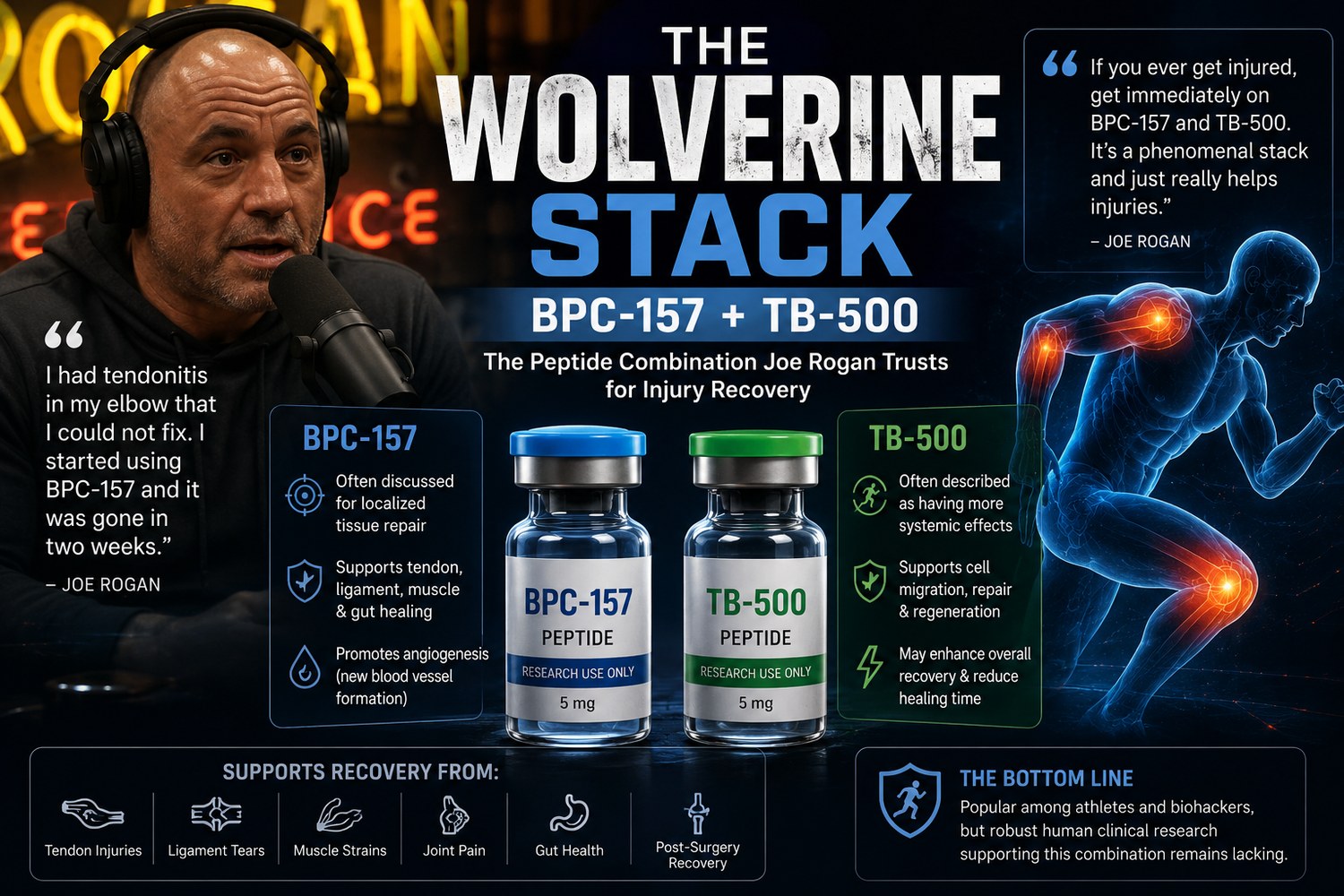
Over the past several years, Rogan has repeatedly discussed BPC-157 with physicians, scientists, athletes, comedians, and health experts, turning what was once an obscure research peptide into one of the most searched recovery compounds in the world. But what has he actually said about it? Has he personally used it? What claims are supported by science, and where does the evidence stop?
What is BPC-157?
BPC-157, or Body Protection Compound-157, is a synthetic peptide made of 15 amino acids. It was originally derived from a protective protein found in human gastric juice and has been studied mainly in laboratory and animal models for its potential role in healing soft tissue. You can read our full breakdown in the BPC-157 evidence guide.
Researchers have investigated BPC-157 for its possible effects on tendons, ligaments, muscles, bones, gastrointestinal tissue, blood vessel formation, and inflammation.
Despite years of research, BPC-157 is not an FDA-approved medication for any condition, and high-quality human clinical trials remain limited.
Why Joe Rogan helped make BPC-157 famous
Long before peptides became a trending topic on social media, Joe Rogan was discussing them on his podcast. Unlike many celebrity endorsements, Rogan never claimed to invent BPC-157 or portray it as a miracle drug. Instead, he spoke about his own experiences recovering from injuries and invited physicians, scientists, and athletes to explain why they believed peptides deserved more research.
As those conversations accumulated, interest exploded. Today, searches such as Joe Rogan BPC-157, Joe Rogan peptides, Joe Rogan TB-500, and Wolverine Stack are some of the most common terms associated with recovery peptides.
Joe Rogan's personal experience
Perhaps the most repeated story tied to Rogan involves chronic elbow tendonitis. He has discussed struggling with tendon pain that would not improve with usual treatment, and has described turning to BPC-157 during recovery and feeling that his elbow improved quickly. We have not been able to tie the specific first-person wording that circulates online to a particular episode, date, or timestamp, so we describe his account in general terms here rather than quoting it.
Rogan has also discussed using the peptide during recovery from Achilles injuries and has said that, in his personal experience, injecting near the injury site produced better results than injecting elsewhere.
These are personal experiences, not controlled scientific studies. Individual outcomes cannot establish that a treatment is effective for everyone.
The Wolverine Stack
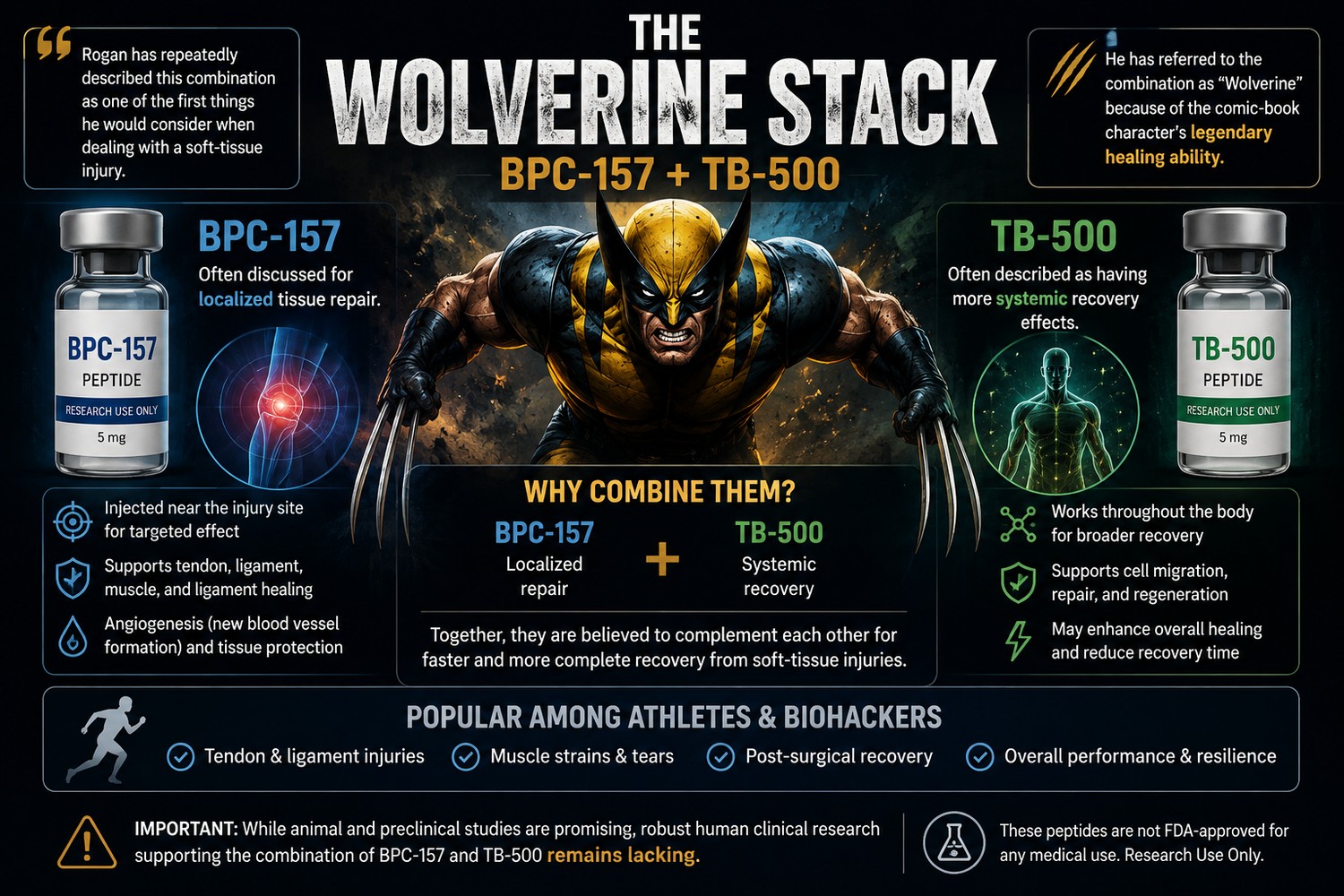
One phrase almost every peptide enthusiast recognizes is the Wolverine Stack. This nickname refers to combining BPC-157 and TB-500. Rogan has described this combination as one of the first things he would consider when dealing with a soft-tissue injury, and he has called it Wolverine after the comic-book character's legendary healing ability.
The theory behind combining the two is that BPC-157 is often discussed for localized tissue repair, while TB-500 is often described as having more systemic recovery effects. While the combination is popular among athletes and biohackers, robust human clinical research supporting it remains lacking.
What guests have said
One reason Rogan's discussions became so influential is the variety of guests he has interviewed.
Andrew Huberman
Huberman has discussed the potential biological mechanisms while repeatedly emphasizing that most available evidence comes from animal studies rather than large human trials, and that real risks remain.
Robert F. Kennedy Jr.
Kennedy has publicly positioned himself as a supporter of peptide therapy and of improving legal access through regulated compounding, a stance that has featured prominently in the 2026 policy conversation around peptides.
Physicians and practitioners
Guests including clinicians working in regenerative medicine have shared anecdotal experiences treating patients with peptides, often describing improvements in recovery following tendon or ligament injuries. These interviews illustrate why BPC-157 has become so widely discussed, but they do not replace clinical evidence.
What Joe Rogan says BPC-157 can do
Across multiple episodes, Rogan has associated BPC-157 with tendon healing, ligament recovery, muscle repair, reduced inflammation, faster injury recovery, Achilles rehabilitation, and gut support. Many of these topics align with areas researchers are actively studying. However, researchers caution that promising laboratory findings do not automatically translate into proven clinical benefits in humans.
Does the science agree?
The current evidence paints a more nuanced picture.
Strongest evidence. Animal studies consistently show improvements in tendon repair, ligament healing, soft-tissue recovery, and gastrointestinal protection.
Limited human evidence. Human studies remain small, preliminary, often uncontrolled, and insufficient to establish effectiveness. Researchers generally agree that BPC-157 deserves further study, but the current evidence does not allow physicians to conclude that it reliably heals injuries in people.
BPC-157 science scorecard
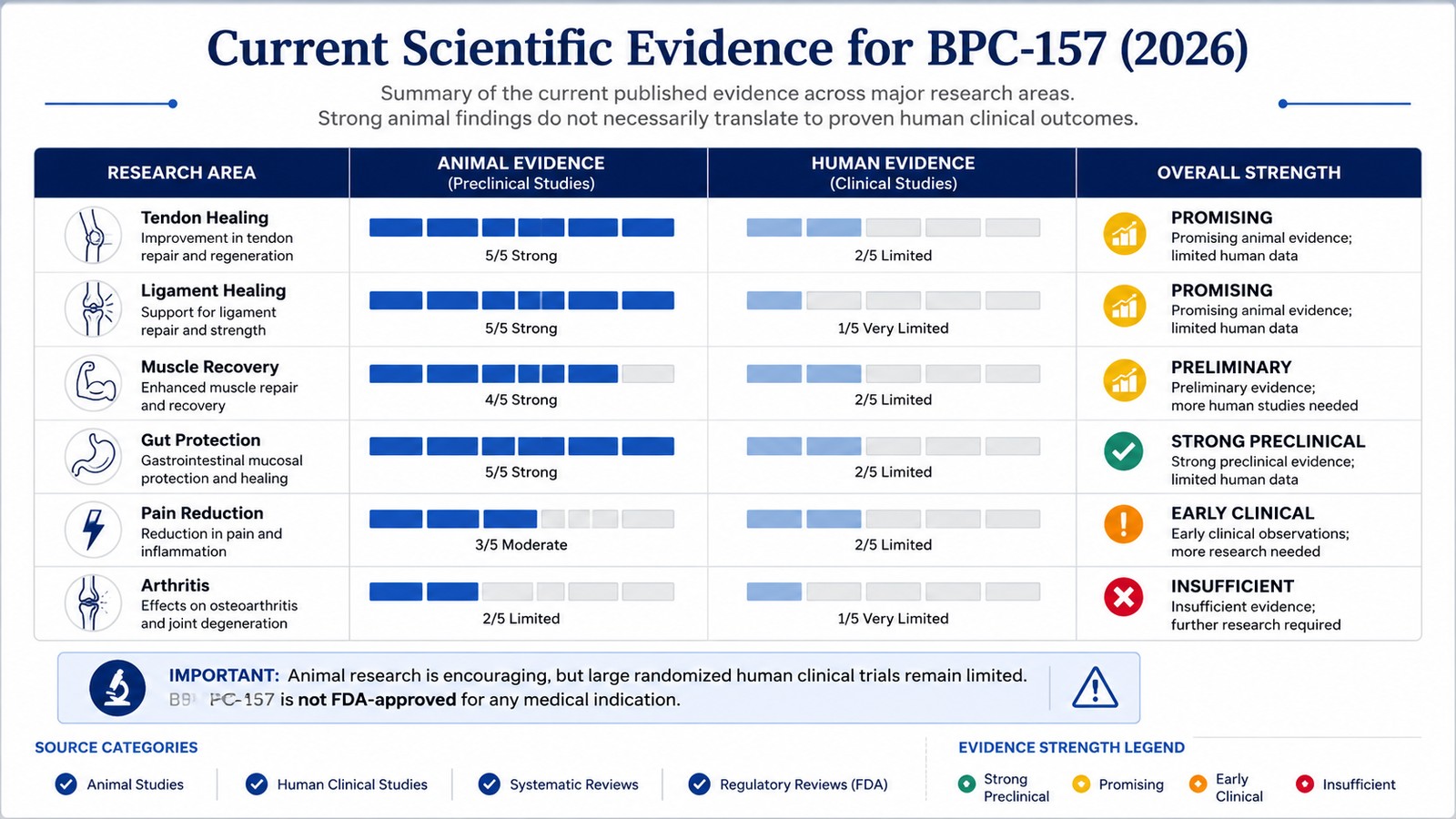
| Claim | Current evidence |
|---|---|
| Tendon healing | Promising animal evidence, limited human data |
| Ligament healing | Promising animal evidence |
| Muscle recovery | Preliminary evidence |
| Gut protection | Strong preclinical evidence |
| Pain reduction | Early clinical observations |
| Arthritis | Insufficient evidence |
Is BPC-157 FDA approved?
One of the biggest misconceptions surrounding BPC-157 is that it has been approved as a medication. It has not. As of 2026, BPC-157 is not FDA approved, it has no approved medical indication, and regulatory discussions about pharmacy compounding are ongoing. Professional athletes should also know that BPC-157 is prohibited by the World Anti-Doping Agency. For the fuller regulatory picture, see our coverage of the FDA compounding decision.
Separating hype from reality
Joe Rogan deserves real credit for bringing attention to peptide research. At the same time, it is important to separate personal experience from scientific proof. Rogan has always described what worked for him personally. Scientists, meanwhile, continue working to determine whether those experiences can be consistently reproduced in carefully controlled clinical trials. Those are two very different things.
Frequently asked questions
Does Joe Rogan use BPC-157?
He has publicly discussed using it during recovery from tendon and Achilles injuries.
Does Joe Rogan recommend it?
He shares his personal experiences but generally frames them as anecdotal rather than medical advice.
Is BPC-157 FDA approved?
No.
What is the Wolverine Stack?
A combination of BPC-157 and TB-500 that is commonly discussed for injury recovery.
Is the science conclusive?
No. Animal research is promising, but large, well-controlled human clinical trials are still lacking.
Final thoughts
Few public figures have influenced the conversation around recovery peptides more than Joe Rogan. His discussions have introduced millions of listeners to compounds like BPC-157 and TB-500, sparking widespread interest among athletes, clinicians, and everyday fitness enthusiasts.
Yet the most important takeaway is not that BPC-157 is a miracle peptide. It is that curiosity should be matched with evidence. While Rogan's personal stories and guest interviews have fueled enthusiasm, the scientific community continues to call for larger, higher-quality human studies before firm conclusions can be drawn.
For anyone exploring peptide therapy, the smartest approach is the same one reflected throughout this article. Understand the research, recognize the limits of current evidence, work with qualified healthcare professionals, and be cautious of exaggerated claims. The science of peptides is evolving rapidly, and BPC-157 remains one of its most closely watched compounds.
Read more and follow along
Explore the full library of evidence-first peptide guides, free articles, and tools at peptidenav.com, including our peptide and compound reference. For the latest peptide research, FDA developments, and honest breakdowns:
Sources and further reading
- The Joe Rogan Experience, episodes discussing BPC-157, TB-500 and injury recovery (public podcast statements).
- Andrew Huberman, Huberman Lab, public comments on peptides noting many animal studies but essentially no clinical trials and real risks.
- NPR. Coverage of the 2026 FDA peptide compounding review and RFK Jr's stated support for peptides. npr.org
- Pharmacy Times. Analysis of the peptide reclassification and what RFK Jr's announcement means. pharmacytimes.com
- World Anti-Doping Agency. Prohibited List (BPC-157 and related non-approved substances). wada-ama.org
This article summarizes publicly reported statements as of August 2026 and is educational, not medical or legal advice. Personal anecdotes are not evidence of effectiveness. Always consult a licensed healthcare professional.