What the MOTS-c evidence actually shows
MOTS-c is one of the more scientifically interesting peptides in the current wave, a tiny molecule your own mitochondria make. The biology is real and genuinely novel. The human proof for taking it as a therapy is not there yet.
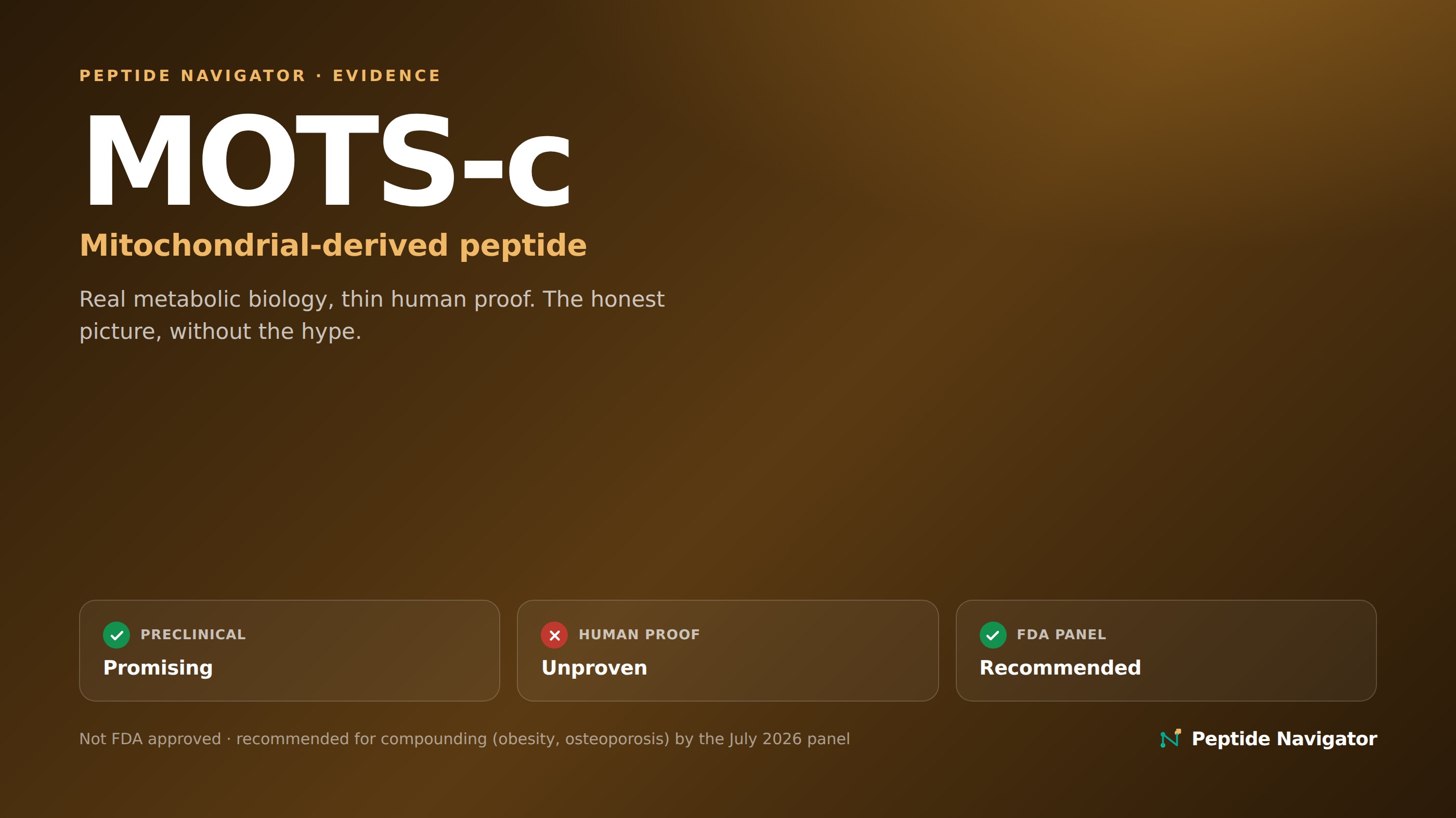
Most peptides people talk about come from outside the body. MOTS-c is different. It is made inside your own cells, and that origin is a big part of why researchers find it fascinating and why the marketing has run ahead of the evidence.
What is MOTS-c?
MOTS-c is a mitochondrial-derived peptide, a short chain of 16 amino acids encoded not in the usual cell nucleus but within mitochondrial DNA. It was identified around 2015, and research suggests it acts as a metabolic signal, helping regulate how cells use energy, in part by activating a master energy sensor called AMPK. In animal studies, it improves insulin sensitivity and helps the body handle glucose, which is why it gets described as an exercise-mimicking or metabolic peptide.
MOTS-c is a natural signal your mitochondria use to manage energy and metabolism. That is a real and interesting discovery. It is not the same as proof that injecting extra MOTS-c fixes obesity or bone loss in people.
MOTS-c benefits: what the human evidence actually shows
The preclinical story is genuinely promising. In animal studies, MOTS-c has improved insulin sensitivity, protected against diet-induced weight gain, and shown effects on metabolism and bone. The human picture is much earlier than the marketing suggests, and the distinction that matters is between measuring MOTS-c and giving it. Almost every human study to date measures the body's own circulating MOTS-c, for example how it rises after exercise or tracks with metabolic fitness. That is correlation, and it does not show that injecting extra MOTS-c reproduces the same effect. As of September 2026, exactly one registered clinical trial is actually administering MOTS-c to people: a recruiting study in Shenzhen, China, testing it for insulin sensitivity in adults with prediabetes and excess weight, with no results posted (ClinicalTrials.gov NCT07505745). There are no completed randomized, placebo-controlled human trials of MOTS-c for obesity, osteoporosis, or anything else.
Did the FDA approve MOTS-c in 2026?
Not as a drug. On July 23, 2026, an FDA advisory committee voted to recommend that MOTS-c be added to the Section 503A Bulks List, with obesity and osteoporosis as the nominated uses. That would allow licensed compounding pharmacies to prepare it with a prescription if the FDA adopts the recommendation. It was a recommendation, not FDA drug approval, and it came over the objection of the FDA's own scientists, who noted the lack of adequate human data. We covered what the vote does and does not mean in the full FDA peptide meeting results.
Because MOTS-c acts on core metabolic pathways, including blood sugar handling, it is not something to experiment with casually. Human safety data is thin, long-term effects are unknown, and anyone considering it should do so with a clinician who can actually monitor them, not off a forum protocol.
MOTS-c side effects and safety
The honest answer is that the side effect profile in humans is not well established, because the controlled studies have not been done in the people using it. User reports tend to be limited and anecdotal, which is not safety data. With so little formal human exposure, rare or long-term risks simply have not been measured. As with the other recovery and metabolic peptides, no reported harm in small or uncontrolled use is not the same as proven safe.
Is MOTS-c legal, and is it allowed in sport?
MOTS-c is not an FDA-approved drug and has been sold as a research chemical, often labeled not for human use. The 2026 advisory vote could open a legal compounding pathway through licensed pharmacies if the FDA finalizes it, but that has not happened. On the sports side, MOTS-c is frequently promoted as a performance and endurance aid, which is exactly the kind of metabolic modulator anti-doping agencies watch closely. Any tested athlete should treat it as a doping risk and check the current prohibited list rather than assume it is allowed.
The honest bottom line
MOTS-c may be the most scientifically intriguing peptide in this group, because it points to a whole class of signals our own mitochondria produce. But intriguing biology is a starting line, not a finish line. There is no human trial showing that taking MOTS-c delivers the metabolic or bone benefits it is sold for. The 2026 FDA vote could move it into a regulated, prescription-based system, which beats the gray market, but it does not change the evidence. Understand the gap, and take it to a clinician rather than a checkout page. For the compound most often compared with it, see what the BPC-157 evidence actually shows.
Know each peptide before you talk to a clinician
We are building plain-English, fully sourced guides across the peptides people actually ask about, evidence and caveats included. Explore what is live now in the library.
Browse the libraryReferences
MOTS-c is an active area of mitochondrial research, but the human evidence for taking it as a therapy is at an early stage. The one registered trial that administers it to people, and the regulatory record, are listed here.
ClinicalTrials.gov, identifier NCT07505745. MOTS-c for Improving Insulin Sensitivity in Adults With Prediabetes and Overweight/Obesity. Interventional trial; Shenzhen, Guangdong, China; status recruiting; no results posted as of September 2026. (ClinicalTrials.gov NCT07505745)
FDA Pharmacy Compounding Advisory Committee meeting materials, July 23-24, 2026 (FDA.gov).
This article summarizes publicly reported information as of July 2026 and is educational, not medical or legal advice. MOTS-c is not approved by the FDA for human use. Regulatory status and evidence can change. Always consult a licensed healthcare professional before making any health decision.